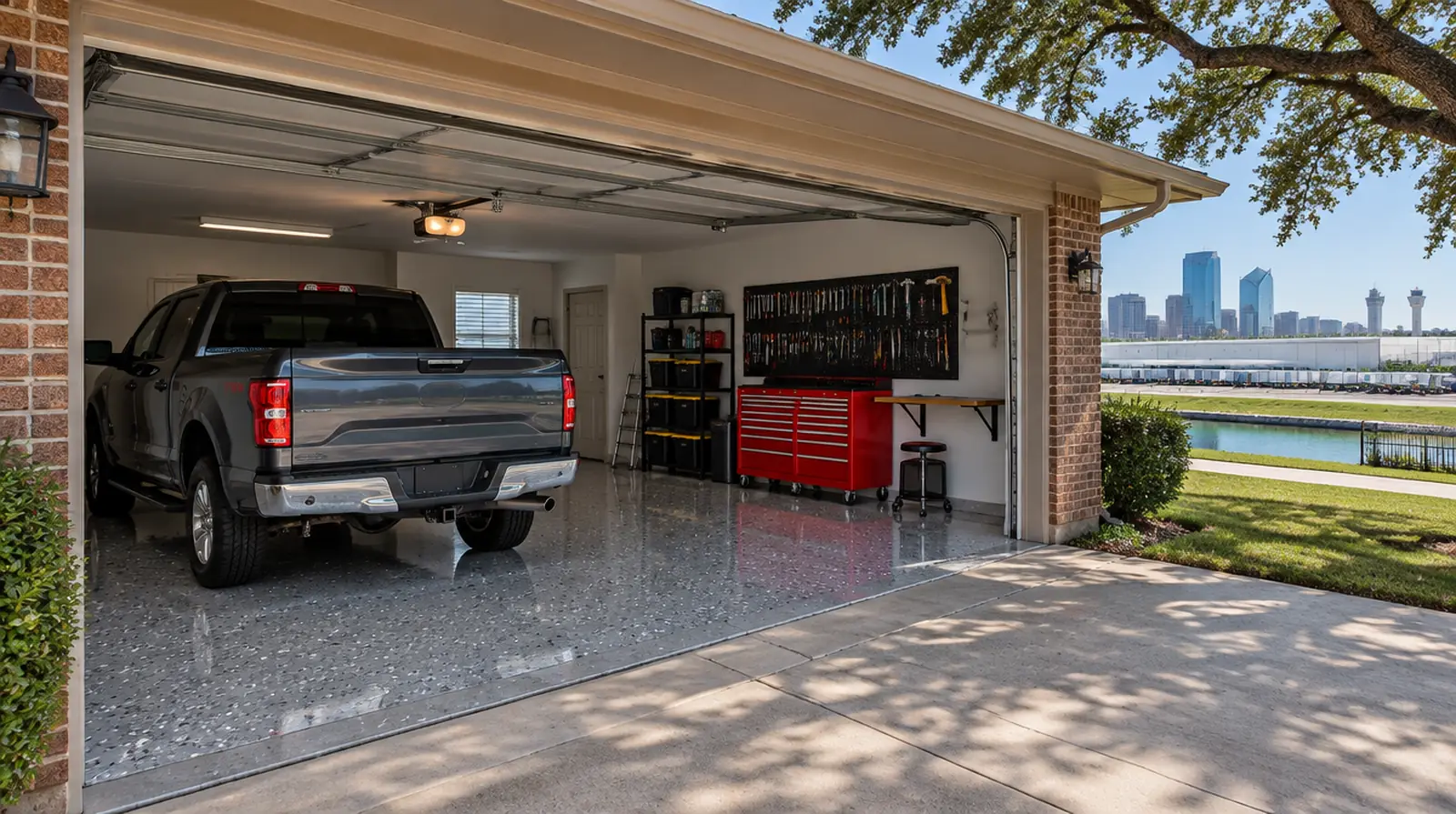
Why garage floors fail, and how we prevent it
Most failed garage coatings we see share one cause: the concrete was never properly prepared. A homeowner or handyman washes the floor, maybe etches it with acid, and rolls on a thin kit. It looks fine for a few months. Then hot tires grab the coating and peel it up in strips, or moisture pushes it off in bubbles. The material was not the only problem. The slab simply never had the open texture a coating needs to anchor itself.
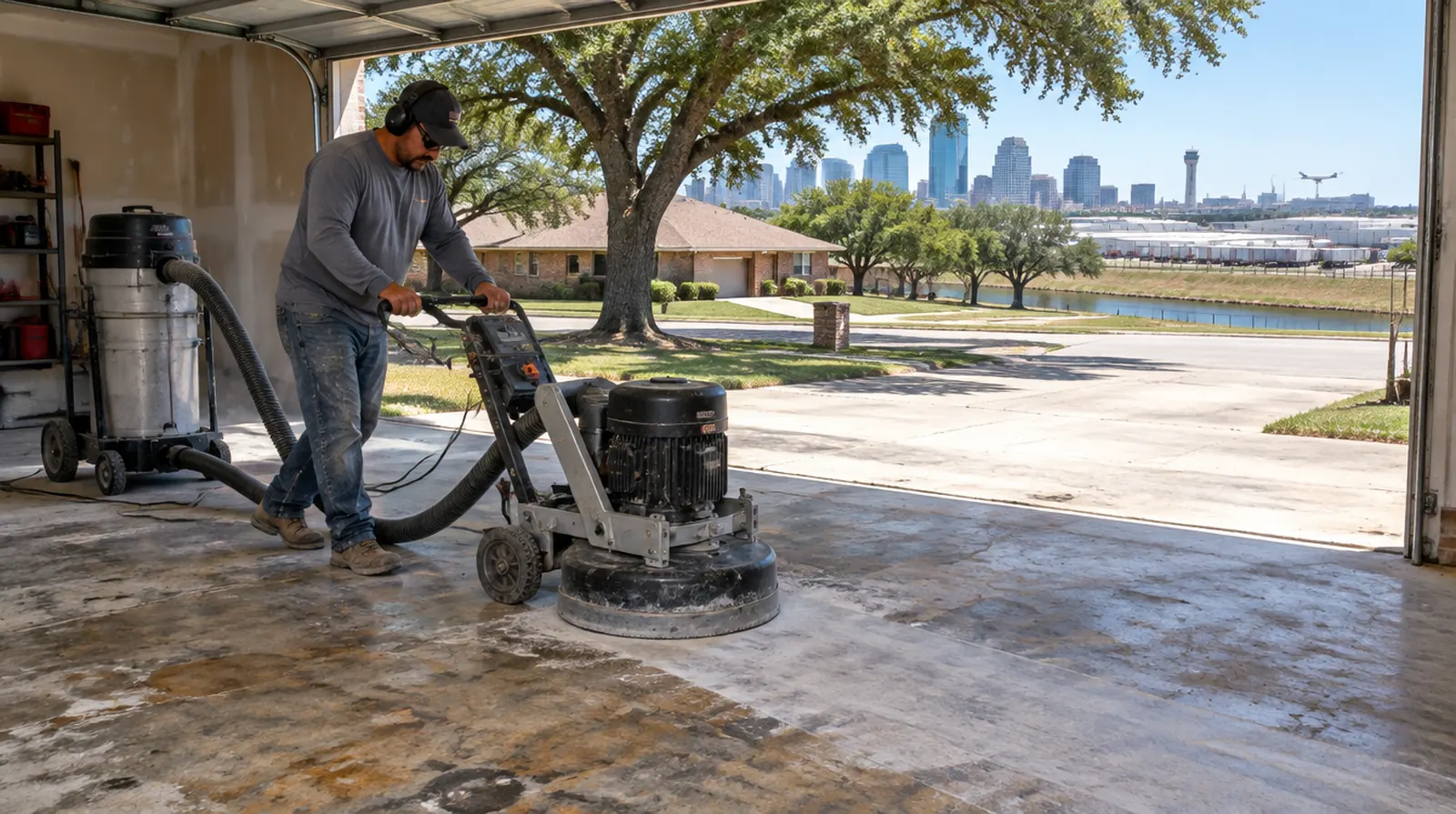
We start every garage with mechanical diamond grinding. Our grinders remove the weak top layer of cement paste, old sealers, paint, and surface contamination, leaving a clean, porous surface. Oil stains that have soaked deep into older floors are treated with degreasers and, when needed, ground out further. The dust is captured by HEPA extractors, so your house and car do not end up coated in powder.
Repairs come before color
Many garages in established neighborhoods have cracks from years of soil movement, chips along the door edge, or low spots near the drain. We fill cracks with flexible or rigid repair materials depending on whether they are still moving, patch spalled areas and grind repairs flush. Expansion joints can be kept as visible lines or filled for a seamless look. Taking time on this step means the finished floor looks smooth and uniform, not like a coating painted over a damaged surface.
The coating system
Our standard garage system has three main layers. First comes a moisture-tolerant epoxy primer that soaks into the pores of the concrete and forms a strong mechanical bond. Next, a pigmented base coat is applied, and decorative vinyl flake is broadcast into it while it is wet. After the base cures, excess flake is scraped and vacuumed, and a clear polyaspartic topcoat seals everything in. The polyaspartic layer is UV stable, resists chemicals and abrasion, and stands up to the heat that builds in a closed garage during summer.
For homeowners who prefer a cleaner look, we offer solid-color epoxy with a light flake accent or no flake at all. We can also add fine aggregate to the topcoat for extra traction near the entry door or on steps.
Choosing colors
Flake blends range from light grays that brighten a dim garage to darker mixes with tan and brown tones that hide dust and tire marks. Many of our clients in older brick homes like warm blends that tie in with the exterior. We bring physical samples to your home so you can see them under your own lighting, which looks very different from a screen or brochure.
Hot tire pickup
When tires heat up on summer roads and then park on a floor, they soften the surface beneath them. As they cool, they can lift weak coatings off the concrete. A properly ground slab, a high-quality primer and a thick, hard topcoat prevent this. We do not use water-based kits or thin single-coat products in garages for this reason.
Timeline
- Day one: inspection, grinding, crack repair, primer and base coat with flake.
- Day two: scraping, cleanup and clear topcoat.
- Return to use: foot traffic in about a day, vehicles in two to three days depending on temperature.
Larger garages, heavy repairs or old coatings to remove can add time. We let you know the schedule before we start.
Using your garage as a room
In many homes the garage doubles as a gym, laundry area or hobby space. A bright coated floor reflects light, makes cleaning easy and gives the room a finished feel. We can coat steps into the house and add a cove base along the walls so water and dirt do not collect at the edges.
Care and maintenance
Sweep or blow out debris, and wash occasionally with a pH-neutral cleaner. Use a pad under motorcycle kickstands and jack stands. Wipe up gasoline, brake fluid and battery acid promptly. Avoid dragging heavy steel items across the floor. A simple routine keeps the coating looking fresh for many years.
Common questions
Can you coat over my old floor paint?
We remove it first. Coating over failing paint leads to peeling.
Do I need to empty the garage?
Yes, the floor must be clear. We can suggest short-term storage options.
Will cracks come back?
Repaired cracks are usually stable, but active soil movement can reopen them. We explain what to expect.
Is the floor slippery when wet?
Flake floors have texture, and we can add grit to the topcoat for extra grip.
Schedule a garage visit
Contact us to book a free inspection and written quote.
to get a garage floor epoxy quote.
Call (469) 472-5787 for a free estimate.