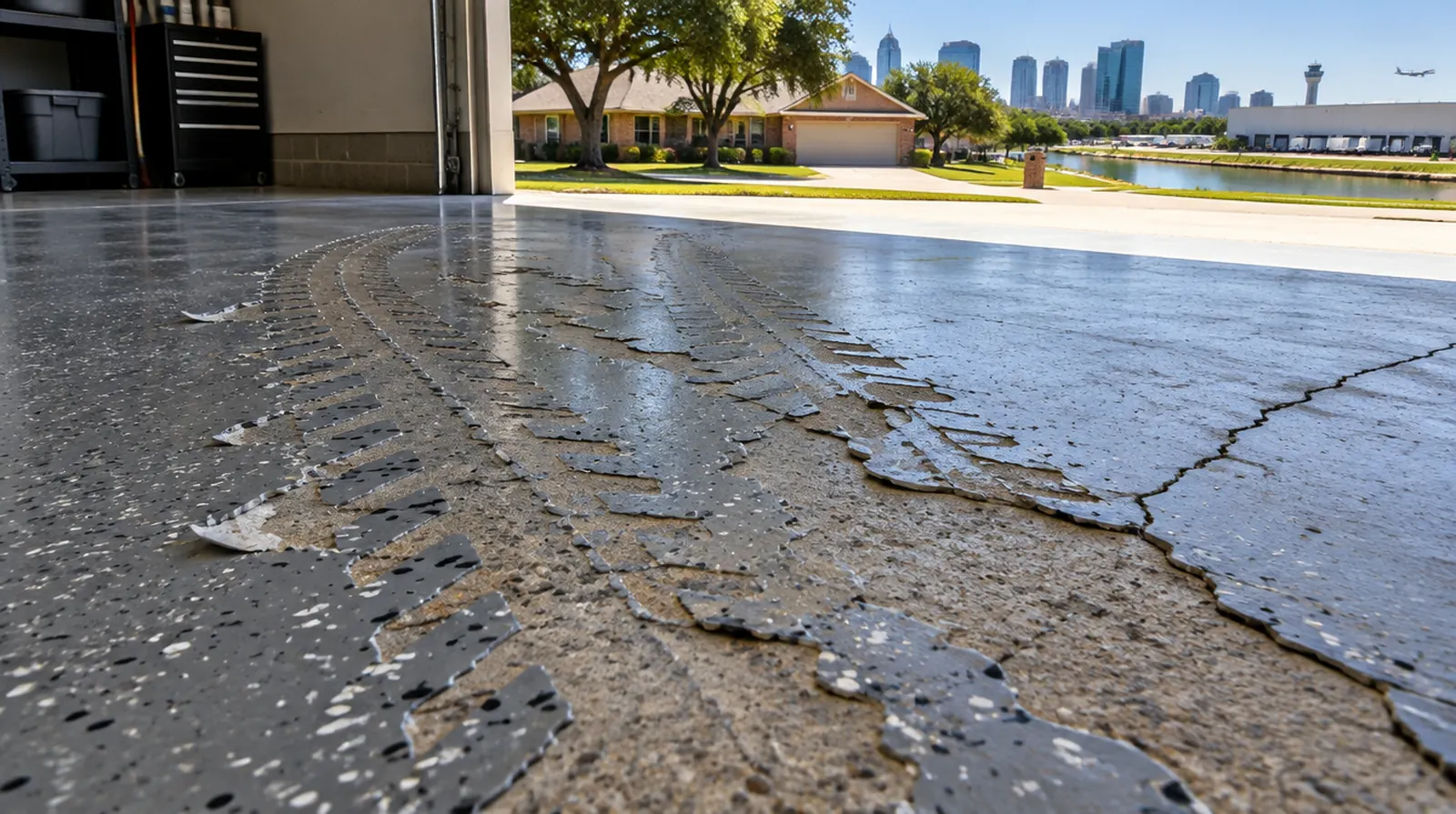
Why coatings fail
We are called to many floors that were coated by someone else and are now failing. The most common causes are inadequate surface preparation, moisture coming up through the slab, thin or low-quality materials, coatings applied in bad weather, and chemical or mechanical damage. Hot tire pickup is a classic symptom: the coating lifts in the shape of tire treads where cars park. Bubbles and blisters often point to moisture or outgassing. Yellowing and chalking usually mean an epoxy without a UV-stable topcoat was exposed to sunlight.
Our diagnostic approach
Before recommending a repair, we inspect the floor and determine why it failed. We check how well the existing coating is bonded, look for moisture, review any information about the products used, and examine the slab for cracks or settlement. This matters because simply recoating a failed floor without addressing the cause usually leads to the same problem again. In many cases, the right answer is removing the coating entirely and starting fresh.
Repair options
- Spot repairs: for small chips or gouges in an otherwise well-bonded floor.
- Recoat: when the coating is bonded but worn, scratched or dull, we abrade and apply a new topcoat.
- Partial removal: for floors with localized failures, removing and recoating specific areas.
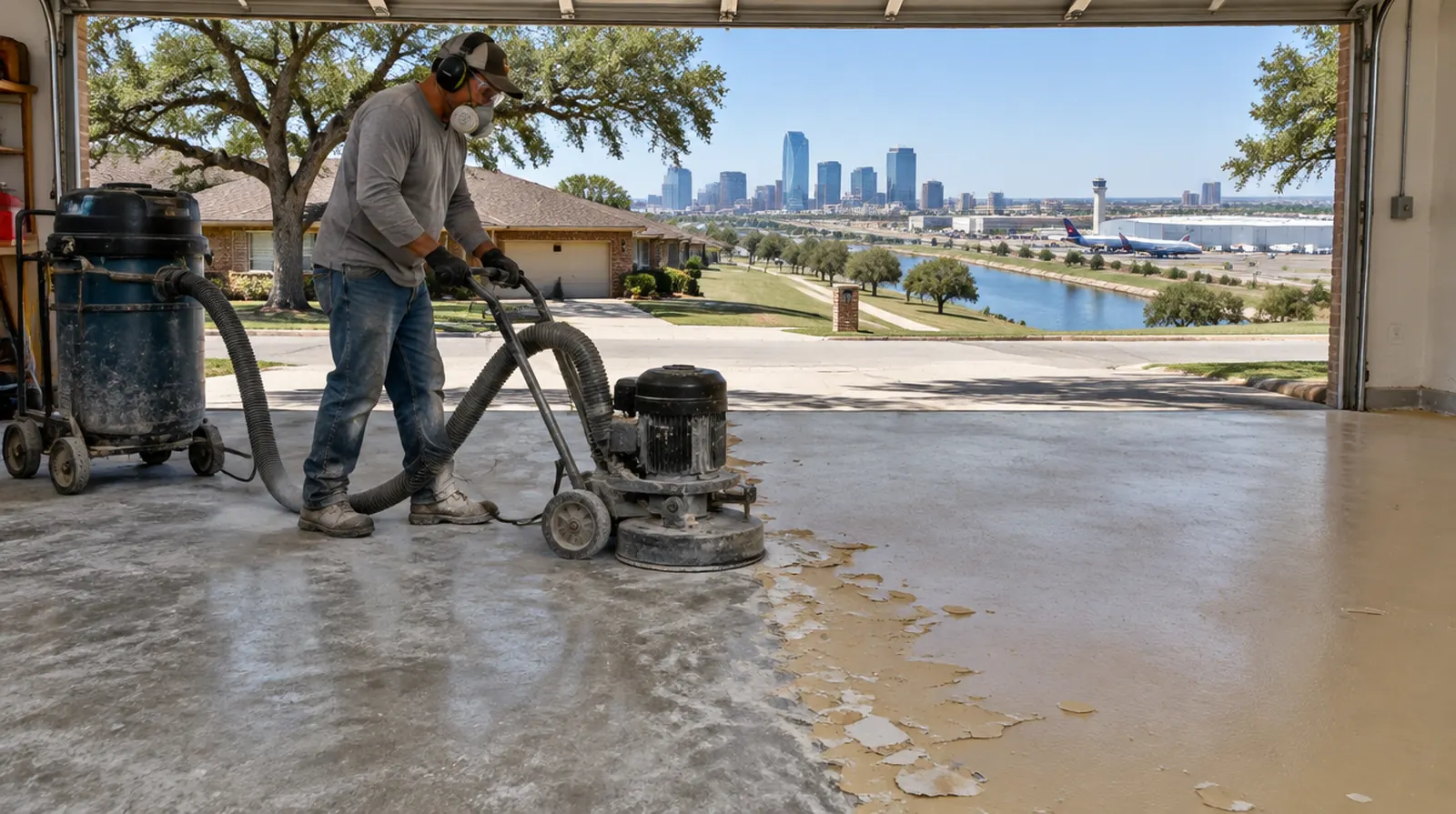
- Complete removal: for widespread peeling or bubbling, we grind off the coating and install a new system.
- Crack and joint repair: filling and stabilizing cracks before coating.
Matching an existing floor
Exact color matches on older floors can be difficult, since coatings fade and flake blends change over time. For spot repairs, we try to match as closely as possible. When a match is not achievable, we may suggest recoating the entire floor or a defined section so the result looks intentional. We explain these options honestly so you can decide.
Removing old coatings
Removing failed coatings requires aggressive grinding, sometimes with specialized tooling for thick or rubbery materials. Our grinders are connected to dust extractors to keep the area clean. After removal, we assess the slab, repair damage and install a new system with proper preparation. In older garages, we often discover old paint, sealers or oil saturation that contributed to the original failure.
Moisture problems
If moisture is the cause, we test vapor emissions and use a moisture-tolerant primer or vapor barrier system before recoating. Ignoring moisture is one of the most common reasons repaired floors fail again. Slabs on grade without vapor barriers, common in older construction, are prone to these issues.
Commercial repairs
In commercial settings, damaged coatings can create safety and sanitation issues. We repair worn traffic lanes, damaged joints and failed areas in warehouses, kitchens and service bays, often after hours. We can also restripe safety lines after repairs.
Preventing future problems
After a repair, we explain how to care for the floor and what to avoid. Use pads under heavy point loads, keep harsh chemicals off the surface, and clean regularly. For garages, a high-quality polyaspartic topcoat greatly reduces the chance of hot tire pickup.
Common questions
Can you fix a floor you did not install?
Yes. Most of our repair work is on floors installed by others.
Is repair cheaper than replacement?
Sometimes. If the existing coating is well bonded, a recoat costs less than full replacement.
How do I know if my floor can be saved?
We test adhesion during the inspection and explain what we find.
Get your floor evaluated
Contact us and send photos of the damage. We will schedule an inspection.
to have a failing floor evaluated.
Call (469) 472-5787 for a free estimate.